| |
Director:
Samir
|
|
Produced by:
Dschoint Ventschr Filmproduktion
|
Production year:
2001 / 2003
|
|
Language:
In Arabic and Hebrew with English subtitles and English narration
|
Runtime:
111 min
|
|
35mm prints:
1.66:1 / SR
|
SYNOPSIS
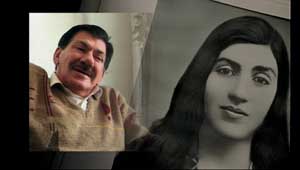 "I wanted to know what it was like to renounce your culture and language ... and become the enemy of your own past." "I wanted to know what it was like to renounce your culture and language ... and become the enemy of your own past."
Samir, the son of an Iraqi Communist who immigrated to Switzerland, reflects upon the clichés of the "Jew" and the "Arab" in Israeli and Iraqi society vis-à-vis the last one hundred years of cinema. Traveling to Israel in search of his father's former colleagues, he meets four fascinating Iraqis in exile.
The extraordinary result, Forget Baghdad offers a rare glimpse into a community which is little-known but extremely important in light of the current Middle East crisis. Those variously known as "Sephardis," "Mizrahim," or "Arab Jews" -- that is, people of Jewish religion and Arab culture -- have long found themselves caught between warring worldviews. Uprooted virtually overnight at the founding of the modern Israeli state, many Sephardis lost first their homeland and then, with the escalation of the Palestinian-Israeli conflict, their very cultural identity.
Organized around the moving life stories of Shimon Ballas, Sami Michael, Samir Naqqash, and Moussa Houri, all former members of the Iraqi Communist Party, Forget Baghdad reopens a lost chapter of Middle Eastern history. The film also explores the at once painful and humorous stories of the younger generation -- the sons and daughters of such Iraqi exiles -- represented by the Iraqi-Swiss filmmaker Samir and Iraqi-Israeli-American film scholar Ella Shohat, both of whom grew up negotiating between two worlds in conflict. In one particularly striking sequence, Shohat challenges the stereotyping of Sephardi Jews on a live Israeli talk show.
Forget Baghdad employs a rich array of archival materials -- British, Iraqi, and Israeli newsreels, Hollywood features (Son of the Sheikh, Exodus, and True Lies), Israeli "Boureka" comedies (Sallah Shabati), and Egyptian musical-comedies -- to explore its themes of disidentification and cultural essentialization. At a moment when the United States remains at war in Iraq, and when peace in the Middle East seems more and more out of reach, this especially timely documentary offers a much-needed glimmer of sanity and hope.
In his "entertaining, ironic and visually stunning film essay, Samir creates a brilliant tour de force," writes Deborah Kaufman of the San Francisco Jewish Film Festival; and the project "achieves a density of ideas and images that extend the boundaries of the documentary form" (Vancouver International Film Festival), fashioning a narrative at once "timely and thought-provoking." (Variety).
|
Credits
|
| Protagonists |
..................... |
Shimon Ballas
Moshe (Moussa) Houri
Sami Michael
Samir Naqqash
Ella Habiba Shohat
|
| Written and Directed by |
..................... |
Samir |
| Producers |
..................... |
Samir
Karin Koch
Gerd Haag
|
| Commissioning Editors |
..................... |
Paul Riniker
Werner Dütsch
|
| Directors of Photography |
..................... |
Nurith Aviv
Philippe Bellaiche
|
| Assistant Director |
..................... |
Ula Tabari |
| Editing |
..................... |
Nina Schneider
Samir
|
| Assistant Editing and Computer Animation |
..................... |
Adrian Aeschbacher |
| Online Supervisor |
..................... |
Ian Mathys |
| Online Operator |
..................... |
Ilona Czech / Rudas Studios, Düsseldorf |
| Music |
..................... |
Rabih Abou-Khalil |
| Sound |
..................... |
Tully Chen, Israel
Daniel Olivier, Paris
David Powers, NYC
|
| Produced by |
..................... |
Dschoint Ventschr Filmproduktion, Zürich |
| In Cooperation with |
..................... |
TAG/TRAUM Filmproduktion, Cologne
SRG-SSR idée suisse / SF DRS
Teleclub AG, Switzerland
WDR Westdeutscher Rundfunk
|
| Sound Editor |
..................... |
Alexander Weuffen / Sound Vision, Cologne |
| Assistant Sound Editor |
..................... |
Florian Beck / Sound Vision, Cologne |
| Dialogue Editor |
..................... |
Lucie Tuma |
| Rerecording Engineer |
..................... |
Tilo Busch / Sound Vision, Cologne |
| Production Manager |
..................... |
Cornelia Volmer
TAG/TRAUM Filmproduktion, Cologne
|
| Production Assistants |
..................... |
Judith Hossli
Susa Katz
Bente Matthes
Niki Schawalder
|
| Location Manager |
..................... |
Daniel SchŠublin, NYC |
| Researchers |
..................... |
Suha Bishara
Esther van Messel
Beat Schneider
Rebecca Züffle
Ali Adman Shakir
Wageh George
|
| Translators |
..................... |
Catherine Aguilar
Sophia Kadhim
Ula Tabari
Johathan Kreutner
Sharon Saar-Naville
|
DIRECTOR'S STATEMENT
TRANSLATED FROM THE GERMAN
ON THE FORMAL EXECUTION
Ideally a film's content and form should have a clear and coherent connection to one another, with the perception of the form not taking one's attention away from the content. Yet when well-worn techniques of representation and portrayal are encroached upon by new, unfamiliar creative modes of execution, this can lead to confusion in the reception of a work. Below are a few elucidations on the form of the film Forget Baghdad.
BASIS
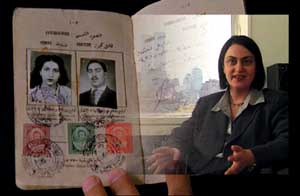 In the process of socialization, individuals are exposed to various influences and, according to a number of neuropsychological theories and hypotheses, these at times contrary experiences are deposited like sediments in the human character. In other words, a human personality is composed of many overlapping sub-characters, with the overall person resulting from the amalgam of all his or her layers. Sami Michael, one of the film's protagonists, puts it aptly: "I'm like a sweet baklava. Each Arab layer is topped by a Jewish layer and so on. But these are not at war with one another, but all belong to the same person and love one another." The other idea feeds on the search for truthfulness in the documentary representation of the world. With a feature film, viewers know that the edited audiovisual presentation constitutes a manipulation. They are also familiar with the way that they, as viewers, tend to automatically identify with the protagonists whenever there are strong characters on screen. Yet with a documentary, such phenomena are not as evident to most viewers, resulting in pressing moral questions for every filmmaker. It was therefore important to me that the filmic representation continually remind viewers that the film was shaped (and manipulated) by a subject. An example: Even prior to shooting, it was clear that the clapboards would remain in the film -- something that is usually regarded as the reject of the film material and that is never shown in normal films. In the process of socialization, individuals are exposed to various influences and, according to a number of neuropsychological theories and hypotheses, these at times contrary experiences are deposited like sediments in the human character. In other words, a human personality is composed of many overlapping sub-characters, with the overall person resulting from the amalgam of all his or her layers. Sami Michael, one of the film's protagonists, puts it aptly: "I'm like a sweet baklava. Each Arab layer is topped by a Jewish layer and so on. But these are not at war with one another, but all belong to the same person and love one another." The other idea feeds on the search for truthfulness in the documentary representation of the world. With a feature film, viewers know that the edited audiovisual presentation constitutes a manipulation. They are also familiar with the way that they, as viewers, tend to automatically identify with the protagonists whenever there are strong characters on screen. Yet with a documentary, such phenomena are not as evident to most viewers, resulting in pressing moral questions for every filmmaker. It was therefore important to me that the filmic representation continually remind viewers that the film was shaped (and manipulated) by a subject. An example: Even prior to shooting, it was clear that the clapboards would remain in the film -- something that is usually regarded as the reject of the film material and that is never shown in normal films.
PICTURE IN PICTURE
If, like a baklava, each on-screen picture corresponds to a layer in the viewer's world of experience, the cinematic representation required a hierarchization of the various media on screen. Since, aside from technical parameters, there are no clear boundaries for the cinema frame, it was understood that the overall screen would only condition the maximum size of the picture and that all other frames (or media such as photos, old archival films, etc.) had to be contained therein. Whereas classic montage organizes material sequentially, one after the next, we wanted to use a different approach for this film, presenting various images and graphics in analog form with various image windows appearing in the frame simultaneously. This created a number of unusual problems that forced us to seek new approaches. An example: The aspect ratios of the overall frame correspond to the classic cinema format of 1.66:1. Yet this clashes with the old image ratio of 1.35:1 found in many old newsreels and television pictures. Normally directors will simply trim the old pictures at the top and the bottom. In Forget Baghdad, they were left in their original format and reduced in size so they could be set in the black field of the cinema projection. This allowed their original composition to be preserved while at the same time making it possible to show more than one image in the frame.
MONTAGE
These formal possibilities provided an opportunity to further develop the film's language. While they had no influence on the overall dramaturgy of the film, they made significant demands on the development of the sequential microdramaturgy. For the various strands of meaning in the film are not organized in the usual way -- i.e., in succession (like in the digital world, one after the next) -- but in analog format, or all together at the same time.
This working method is similar to the organization and rhythmization of music, in which harmonies often overlap one another in counterpoint and analogies are created through the alignment of melody and beat.
In a concrete sense: After determining the size ratios of the different media at the montage table, the main task was coordinating and timing the fading in and out of the eight different visual planes.
EIGHT VISUAL PLANES
The overall structure and texture of the film was dictated by eight different types of recording and media formats (digital video in both 16:9 and 4:3, Super 16mm, 35mm archival material, Super 8, computer animation, excerpts from feature films, and writings in Arabic, Hebrew, and English) that provided the images and the sounds for the film.
SEARCH PICTURES
The film starts with a sequence at the Zürich Airport. It is the beginning of a search. A search for the protagonists and thus for political as well as private history.
The picture was filmed with a small amateur DV camera, employing a searching look through the viewfinder to suggest subjectivity. This "look" was aided with an electronic shutter using a longer exposure time to bring together two effects:
1) With rapid pans, the picture blurs and goes somewhat out of focus. Only large, colorful objects are easily recognizable.
2) When an object is viewed closely, with the camera holding on it, a kind of freeze frame results. Even the most subtle movements cause the object to "jump" on the screen.
Together with the explanatory off-screen commentary, even laypersons are made clearly aware of the subjectivity in this representation. These scenes were not visually edited in keeping with a classic filmic representation of the world (e.g., establishment of place, shot/reverse shot, etc.), but jump from one location to the next, often skipping around the chronological flow of a single location by way of jump cuts. In the film's hierarchy of magnitude, these "amateur pictures" fill the whole screen. The film was shot in 16:9 format, which was then trimmed on the left and right about 20% to make it fit into the 1.66:1 format. These search pictures then structure the film in its transitions between the historic and the geographic.
INTERVIEW PICTURES
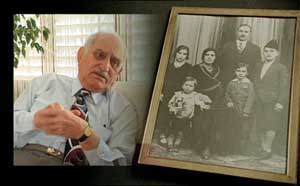
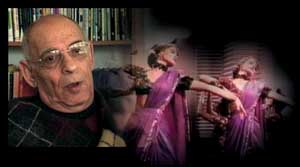 The film's four male principals are all around 70 years of age. With interesting lives to look back upon which they had sought to understand through writing, it was clear that the method for crystallizing these men's life stories would take more the form of an "oral history" than of a cascade of journalistic questions and answers. This meant taking the time for a conversational situation and giving the person opposite the opportunity to meander and tell anecdotes as they recalled their life. Conditioned by this parameter (as well as by their advanced age), the protagonists were not to be hounded at some location or another and forced to perform before the camera, but rather would be filmed in their own homes -- i.e., a place where they felt comfortable. After finishing the initial research work, it was clear to us that these men were not only highly capable of expressing themselves in words, but also with gestures; and in the case of Sami Michael these gestures were of great precision, almost like those of a deaf person. The interviews were also shot on DV, but not with an amateur camera like the one used for our "search pictures." For the interviews we used professional equipment that allowed us to shoot continuously for up to two hours (thus without the interruptions of cassette changes, which disrupt the narrative flow). The chosen format was 1.35:1 (or the television format, 4:3) so that the semi close-up, half-length portrait would have the best possible resolution. The film's four male principals are all around 70 years of age. With interesting lives to look back upon which they had sought to understand through writing, it was clear that the method for crystallizing these men's life stories would take more the form of an "oral history" than of a cascade of journalistic questions and answers. This meant taking the time for a conversational situation and giving the person opposite the opportunity to meander and tell anecdotes as they recalled their life. Conditioned by this parameter (as well as by their advanced age), the protagonists were not to be hounded at some location or another and forced to perform before the camera, but rather would be filmed in their own homes -- i.e., a place where they felt comfortable. After finishing the initial research work, it was clear to us that these men were not only highly capable of expressing themselves in words, but also with gestures; and in the case of Sami Michael these gestures were of great precision, almost like those of a deaf person. The interviews were also shot on DV, but not with an amateur camera like the one used for our "search pictures." For the interviews we used professional equipment that allowed us to shoot continuously for up to two hours (thus without the interruptions of cassette changes, which disrupt the narrative flow). The chosen format was 1.35:1 (or the television format, 4:3) so that the semi close-up, half-length portrait would have the best possible resolution.
Since the narrated life stories were to constitute the very basis of the film, they had to occupy the primary plane in the viewers' subjective perception. Yet because the "search pictures" already filled the whole frame and because the interview footage was more quadratic than all the other pictures used in the background, we placed the interviews as large as possible in the frame so that they would always be perceived as primary, or as the foreground (and also, of course, because it is only in these clips that the life stories are told on camera).
These static narrations were enhanced with photos and archival materials. Even prior to shooting, it was clear that the film would feature the simultaneity of these two levels.
The old men were all placed on the left side of the frame so that the right side of their picture could fade into the background in a smooth transition of shades. With the background image (photos, etc.) partially showing through, there is an automatic connection between the person in the visual foreground and the visual background. For two content-related reasons, the men were to look past the camera from left to right (i.e., not for political reasons ...):
1) Since the interviews were all conducted in Arabic, and because it had been decided even prior to shooting that individual catchwords in Arabic would appear in the background, the right side of the image frame had to be kept free. The protagonists should be able to read the word in the background, as it were. As Arabic is read from right to left, the distance for a long word in a halved background image would have been too short to remain legible.
2) Ella Shohat, the child of Iraqi Jews and the film's sole female figure, certainly expressed strong emotions in relating stories of her socialization in Israel. Unlike the narrations of the four old men, as a scholar she was also able to reflect upon the political conditions of the time with a degree of distance. Her interview was conducted in English. It was to be set against those with the men. Hence, her picture was placed in the right half of the frame. The problem with the catchwords in English was thus also resolved; for in contrast to Arabic or Hebrew, these are obviously read from left to right.
BACKGROUND PICTURES AND PHOTOS
It was planned that each of the protagonists would contribute a substantial amount of additional visual material to the film. In particular, they were to supply private photos that would illustrate the men's narrations. At the same time, of course, viewers naturally also expect to learn something about their living conditions (where the subjects live, how they live, how their homes are furnished, etc.).
These two visual planes were to be given a different texture than the electronic video image of the "interview picture" and the "search picture" planes. These planes were therefore shot on Super 16mm to give them a filmic look (i.e., by the grain of the film). Aside from the men's great enthusiasm for storytelling, the interviews come off as formally static; and so the photos in the background of the interview pictures were to be animated. Unfortunately we only had the photos at our disposal for a brief period after the interviews. We therefore decided on the simplest solution: The photos were pinned on black cardboard over which the camera was panned. The other background images, such as their living quarters and the objects around them (like books and pictures), were combined with still shots. Each of the protagonists was asked to take the team to some favorite place. At this location, each of the figures had both a frontal and profile portrait taken of them, as well as a long shot of the site in which the protagonist was to move further and further away from the camera -- eventually disappearing in the distance, determined by the size ratios. At each of these favorite places, small details of the landscape were filmed. These were inserted during the editing process as background images in order to underscore the mood of each male protagonist. Astonishingly, each of the men chose a place that truly corresponded to his character or longing and that in some way symbolized his perspective. For Sami Michael, it was Mount Carmel -- a secluded wooded chain of hills, visually removed from human society. Moshe Houri disappears amidst the urban park at Ramat Gan, into an imposing avenue of old trees. It's a thoughtlessly laid out space with cemented paths, a concrete fountain, and standardized hedges, otherwise only populated by anonymous individuals. Samir Naqqash chose his Arabic bookstore in the Palestinian section of Jerusalem. The bookstore is located on the busy Salah Al-Din Street in a Muslim neighborhood. Only Shimon Ballas opted for two places. He chose a Tel Aviv beach, with its high-rise buildings in the background, early in the morning; and, very symbolically, the Canal du St. Martin in Paris, with its locks and bridges.
ARCHIVAL MATERIAL FILM
The integration of old newsreels, propaganda films, and television material from a given period into a documentary film is nothing new. Yet the organization of these formal media on various visual planes resulted in unique rhythm problems. It was very difficult to pick individual scenes or to make use of individual moving pictures; for by having these appear behind our interview images, we were forced to insert them into the narrative flow. They needed to come then either in complete and logical narrative sequences or as images with icon-like emphasis (e.g., in slow motion).
ARCHIVAL PRINTED MATTER
There was significantly less archival film and newsreel material available from 1930s and 1940s Iraq than we expected. It was thus necessary to switch to photographic material or book publications or the like. To explicitly differentiate the formal presentation of these images from the photos of the protagonists, all of the archival material from print media was scanned and digitalized and then animated on a computer. It seemed obvious that this material should be inserted into the same image window as the filmed archival material (hence also in black-and-white and at the same position in the overall frame).
SUPER 8
There is only one sequence on Super 8, and it's an old family film from my childhood in Iraq. In terms of the content, it made sense to simultaneously juxtapose this with a 1950s "culture film" on Iraq. The family film was not given the same size as the culture film so that the composition of the two frames could be structured with a visual connection between the two.
FEATURE FILM EXCERPTS
The theme of looking back on the last one hundred years of Middle Eastern history was to include film clips -- especially feature films dealing in the broadest sense with the historical, political, and cultural tensions between Arabs and the West, but also between Arabs and Jews. In the preliminary stages, some seventy Western films were examined such content, as well as about thirty Israeli and a number of Arab films (mainly from Egypt).
After the first rough cut of the material, unfortunately there wasn't much room left to fulfill this intention. The final version contains excerpts from only six Western films, one Egyptian film, and one Israeli.
To set these excerpts apart formally from the other images in the frame (especially from the old black-and-white newsreels), we decided to digitalize them all. For these scenes, the objects and acting individuals were cut out (using a softly drawn border) in order to set them apart from the background. As a result, the viewer's attention can be focused on the most important statements in a given clip. The formerly black-and-white silent films were each given their own coloration.
WRITINGS
 The integration of the writings involved time-consuming and complicated computer work that had to be integrated later on in the editing. The flow of the narration was to be structured using keywords, each intended to reinforce exceptional narrative moments or to act as a sort of chapter heading that opens a sequence. To give viewers a sense of the Arabic character of the film's opening, the first words were to appear at the very beginning of the narrative flow. It was consciously understood that Western viewers were likely to be irritated or confused by the inaccessibility of this content. Along with the listed place names (always in Arabic or Hebrew with the English word next to it), the film excerpts were separately written up as well to enable viewers to order the feature film excerpts in their sub-narration within the entire film. The integration of the writings involved time-consuming and complicated computer work that had to be integrated later on in the editing. The flow of the narration was to be structured using keywords, each intended to reinforce exceptional narrative moments or to act as a sort of chapter heading that opens a sequence. To give viewers a sense of the Arabic character of the film's opening, the first words were to appear at the very beginning of the narrative flow. It was consciously understood that Western viewers were likely to be irritated or confused by the inaccessibility of this content. Along with the listed place names (always in Arabic or Hebrew with the English word next to it), the film excerpts were separately written up as well to enable viewers to order the feature film excerpts in their sub-narration within the entire film.
Arabic and Hebrew quotations were animated. In the case of the at once funny and sad anecdote of "the revenge of the Arabic language" (as told by Shimon Ballas), the quotation was drawn like a compact thundercloud across the black background next to the interview picture.
THREE SOUND PLANES
For a number of years now, the digitization of images has enabled previously undreamt-of possibilities in working with film. Possibilities that have been commonly employed in music for some time now: The free combination of various planes, the mixing of sound effects with the music and/or the original soundtrack, and free access to each sound for manipulation. For this film, the three standard sound planes had to be carefully reworked in connection with the visual effects.
ORIGINAL SOUNDTRACK
As with most documentaries, the content of the original soundtrack of the protagonists constituted the foundation for the sound work. Similar to the image window, the original soundtrack represented the level of the conversation picture, the upper layer. Underneath that came sound design and music. Functioning as an additional structuring element was the off-screen commentary of the sixth protagonist, the director, who appears before the camera now and again to lead the viewer to the film's main figures. These off-screen commentaries constitute a subjective perspective on the film's story and were only added to the "search pictures." These were recorded very softly and calmly to underscore their intimate and subjective character.
SOUND DESIGN
The work on the remaining sound design aspects was quite extensive and unusual for a documentary film. Similar to a feature film, all scenes were reworked and put together with completely new background sounds, similar to a radio play. There were two reasons for this:
1) In preview screenings of the rough cut, it became evident that many viewers (those without a command of Arabic) had difficulties matching individual statements to individual protagonists, especially at the beginning of the film. We had considered this problem and had already added background images of each protagonists' favorite place to their conversation pictures. Yet this was apparently not enough.
Therefore each protagonist was given an additional atmospheric background sound. For Tel Aviv resident Shimon Ballas, this was inner city traffic noise with cars and passersby. For Moshe Houri, who lives in the Tel Aviv suburb of Ramat Gan, a park with the sounds of fountains, sparrows, and people strolling was created. For the interview with Samir Naqqash, conducted in his municipal housing apartment in Petah Tiqvah, we assigned elevator sounds, children screaming, and television noises. And for Sami Michael, who lives on Mount Carmel, we created nature sounds, such as cicadas, rustling leaves, and individual birdcalls.
2) Since on one hand we lacked many archival pictures for the narrative plane's illustration and, on the other hand, the faces, gestures, and language of the protagonists conveyed so much more than expected, we decided to incorporate a subtle "radio play" into the narrations of the original soundtrack. An example of this comes when Moshe Houri is talking about prison and one can hear footsteps in an empty hallway, keys, clinking, metal doors opening and closing, etc.
For each narrative strand, such a "radio play" was developed and then inserted into the overall mix with understatement and restraint.
MUSIC
The music in documentaries is typically very restrained and sparingly employed. For us, however, it was clear early on that the music for Forget Baghdad should be a fusion of European and Arab music and serve a sort of bridging function. Yet the music was by no means supposed to be a colonial annexation of a few Arabic elements into a classically Western film score; it was meant to dynamically support the dramatic events while also generating a certain lightness, and at certain points even an ironic distance. In our pursuit of this effect, the Lebanese jazz musician Rabih Abou-Khalil proved to be the ideal partner. He has lived in Germany for two decades, yet frequently travels throughout the Middle East to record new impressions in folk music. At the same time, he is an important figure in the international jazz scene who has played with renowned musicians such as Charlie Mariano and many others. He has made over twenty albums and his oud playing has shaped some of the wildest jazz fusions.
Abou-Khalil's music put the finishing touches on the soundtrack, giving the film its ironic and dynamic beginning. The piece at the film's opening featured a rhythm section with an unusual beat (based on a folk piece from southern Iraq) as well as a witty horn section that cited the opening melody from "Mission Impossible."
OVERALL PERCEPTION
The main problem in the final editing work was the synchronization of all the above-mentioned visual and sound planes. For each additional element on the time axis not only altered the perception of an individual picture or sound, but also its relationship to its context (picture, sound, title, and music taken as a whole). For us, the utmost maxim was that the final film product should not be perceived as an accumulation of individual effects but, like a piece of music, as the sum of its individual parts ... all creating a harmonic whole.
To be added to our announcement list
please fill in our contact form.
|
|